
Every serious investor or acquirer runs due diligence before they sign. Most founders hear the results for the first time from the other side of the table, at the worst possible moment: when the price, the terms and the timeline are already on the line.
It does not have to work that way. The same review can be run on your own company, months earlier, with one goal: find where growth is blocked, what it costs you, and what to fix first. This article explains what SaaS due diligence is, what it is not, and how to run a first version on your own company with the data and the team you already have.
What SaaS due diligence is, and what it is not
SaaS due diligence is an independent, evidence based diagnosis of a SaaS business. It answers the questions every leadership team argues about: why has growth slowed, why are customers leaving, is the team built for the next phase, and which three things should we fix this quarter.
It is not a financial audit. Accountants do that. It is not a legal opinion, a tax review or a valuation. Those belong to specialists. It is not a security certification either. A good diligence flags legal, compliance and data residency risks for specialist review, and stays focused on how the business actually runs and makes money.
When you need it
Five situations make it urgent:
- Growth has plateaued and the leadership team disagrees on why.
- Churn is eating most of what new sales bring in.
- A funding round, an acquisition or an exit is coming.
- You are starting a second act: a new product, a new market or a new channel.
- A new CEO, COO or board needs a baseline they can trust.
If two of these are true for you today, do not wait for someone else to run the review.
What it looks at: four foundations, connected to the money
A useful diligence examines four foundations and ties each one to revenue quality, unit economics and cash.
People. Do decisions wait for the founder? Are managers promoted doers who still do the work instead of leading it? Do the same few people fight every fire?
Process. Follow one customer from first lead to cash to renewal. Where do they get lost in a handoff between marketing, sales, onboarding and support?
Systems. Is there one version of the truth, or does the data live in spreadsheets, in tools that do not talk to each other, and in a dashboard nobody trusts?
Product. Is there evidence of fit in activation and usage? How much of the roadmap is custom work for the loudest client? Is pricing and packaging helping or hurting? How exposed is the product to AI?
The rule that makes it work: three sources of truth
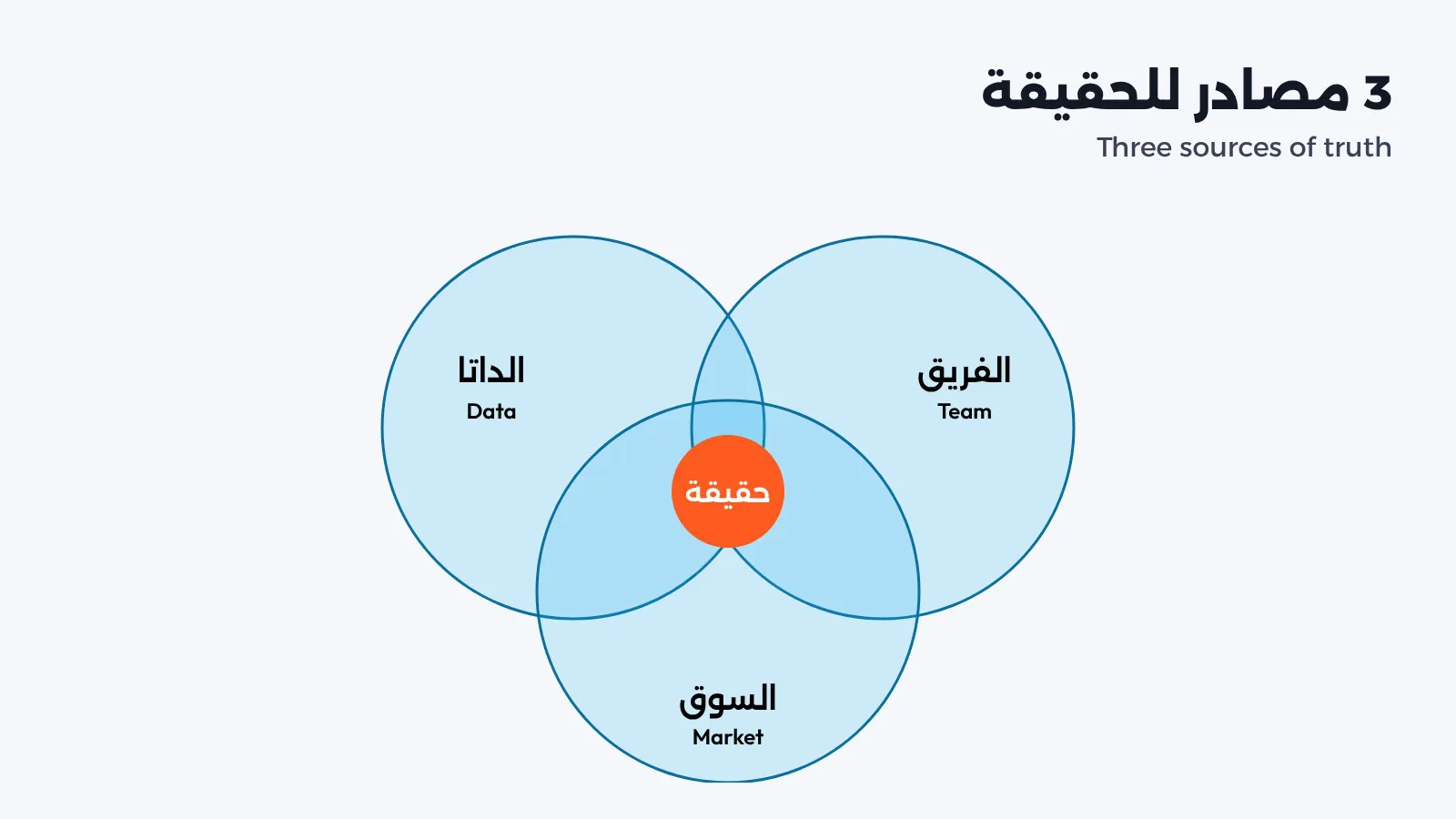
Never trust one source. Compare three:
- The data: billing, CRM, product analytics and finance, pulled raw.
- The team: what leadership and the people doing the work believe is happening.
- The market: what customers, churned customers and lost deals say.
Where all three agree, you have a fact. Where they disagree, you have found the place where the company is stuck.
How to run a first version on your own company
You can do a first pass in a few weeks without outside help. Here is the sequence.
Step 1: Scope it in one page
Write down the three questions your leadership team disagrees on. Then list what you need access to: billing, CRM, product analytics, finance, leadership time and a few customer introductions. If you cannot get access to one of these, that is already your first finding.
Step 2: Rebuild your numbers from raw exports
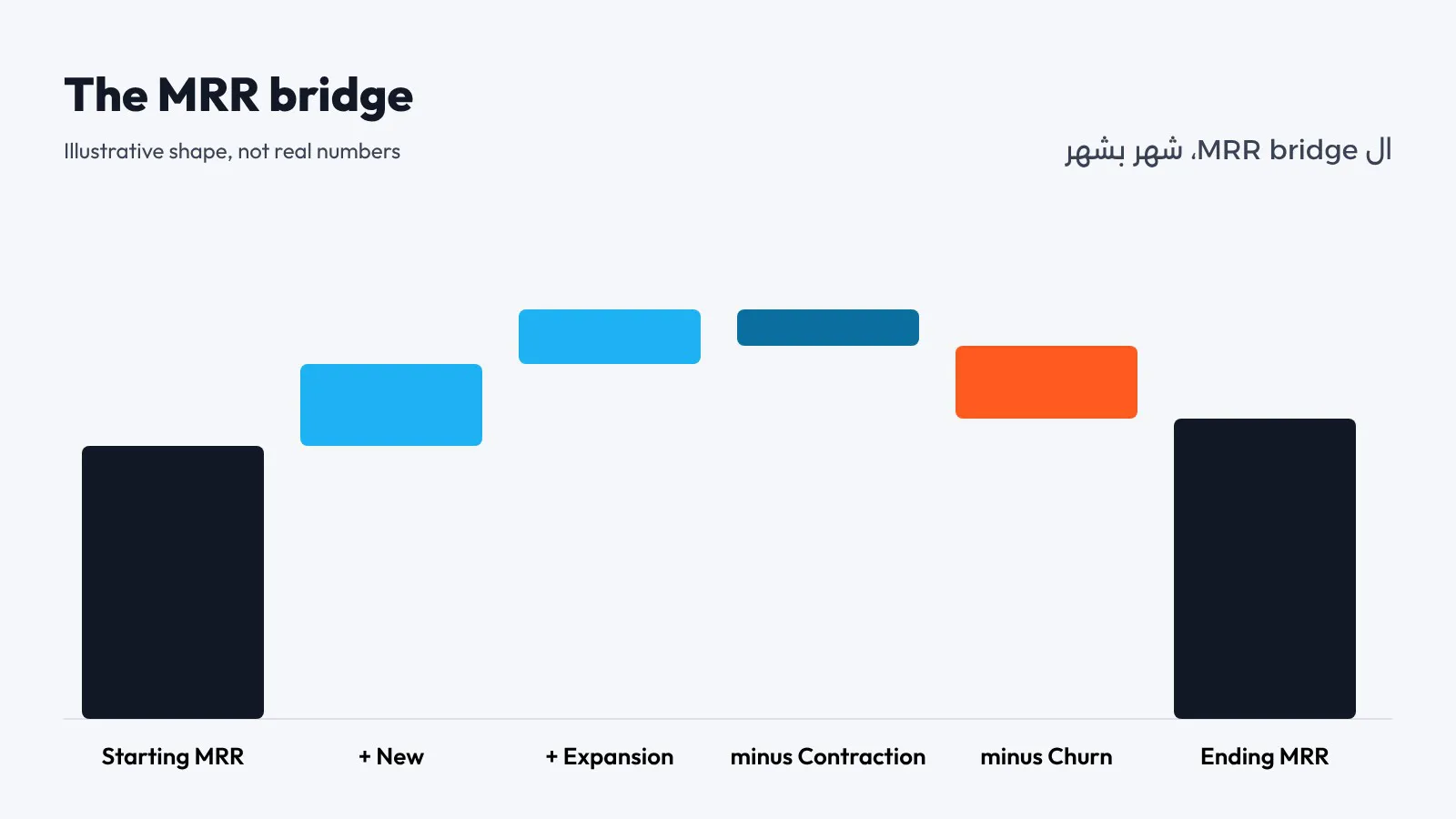
Do not start from the dashboard. Export raw billing data and rebuild monthly recurring revenue yourself, month by month, as an MRR bridge:
Starting MRR, plus new MRR, plus expansion MRR, minus contraction MRR, minus churned MRR, equals ending MRR.
From the same data, calculate:
- Gross revenue retention (GRR): starting MRR from existing customers, minus contraction and churn, divided by starting MRR. Expansion is excluded, so GRR can never go above 100%.
- Net revenue retention (NRR): the same, but expansion is added back. It shows whether your existing customers grow or shrink as a group.
- Logo churn: customers lost in the period divided by customers at the start of it.
- Customer concentration: the share of MRR that comes from your largest ten customers.
If your rebuilt numbers do not match the dashboard, find out why before you do anything else.
Step 3: Interview the team, one by one
Ask three people on your leadership team the same question separately: why has growth slowed? Then ask two people who do the work every day, in sales and in support. Write down the answers word for word. Three different answers is a finding in itself.
Step 4: Listen to the market
Talk to five churned customers and five lost deals. Ask why they chose you, what they expected, what happened, and what they use now. Then mystery shop your own funnel: book a demo under another name, read your onboarding emails, open a support ticket.
Step 5: Rate each foundation
Give People, Process, Systems and Product one of four ratings, with the evidence next to it: Strong, Stable, At risk or Blocking growth. Evidence means a number, a quote or a document, not an opinion.
Step 6: Find the one blocker and put a number on it
Most companies show ten symptoms and have one blocker behind them. Map the symptoms and ask which single cause explains most of them. Then put a revenue or cost number on every finding, so the leadership team can rank them. Turn the top findings into a 30, 90 and 180 day plan, where every action has an owner, a deadline, an effort estimate, an expected impact and the metric that will prove it worked.
An illustration of how the sources disagree
This is an illustrative example, not a real client. Leadership blames churn on a missing product feature. The rebuilt data shows churn is concentrated in one customer segment. Churned customers in that segment say they were sold the wrong fit. The fix is not the feature. The fix is sales qualification. Without all three sources, the company would have spent a quarter building the wrong thing.
What to leave to specialists
Keep legal, tax, valuation and data residency questions out of your own review. Flag them, then send them to the right specialists. Your job is to understand how the business runs and where it is stuck.
Start this week
Pick one step and run it before Friday. The easiest is Step 3: ask three people on your team, separately, why growth has slowed, and compare the answers.
When you want the full version, with an independent team rebuilding the data, rating each foundation and handing you a board ready plan, that is the SaaS Business Due Diligence I lead with ASaaSI Middle East and Mustaner. Book a clarity call, or send me a message on LinkedIn with the words “Due Diligence”, and I will walk you through how it would run on your company.
Take it furtherTake it to a SaaS Clarity Call
Stay on top of MENA SaaS
Every week: what moved in the region’s SaaS industry, what it actually means, and the practical tips I would give a founder sitting in the room. Published on LinkedIn. Subscribe and it comes to your inbox too, with no algorithm in between.