
Picture a normal morning in Egypt. A mother in Assiut posts that the bread outlet ran out early again. A driver in Nasr City films a traffic light that has been dead for a week. A student in Mansoura asks a Facebook group of a few hundred thousand people whether the new exam schedule is real or a rumor.
None of them is filing a complaint. They are just talking. But together, they are telling anyone who is listening exactly where things are working and where they are not.
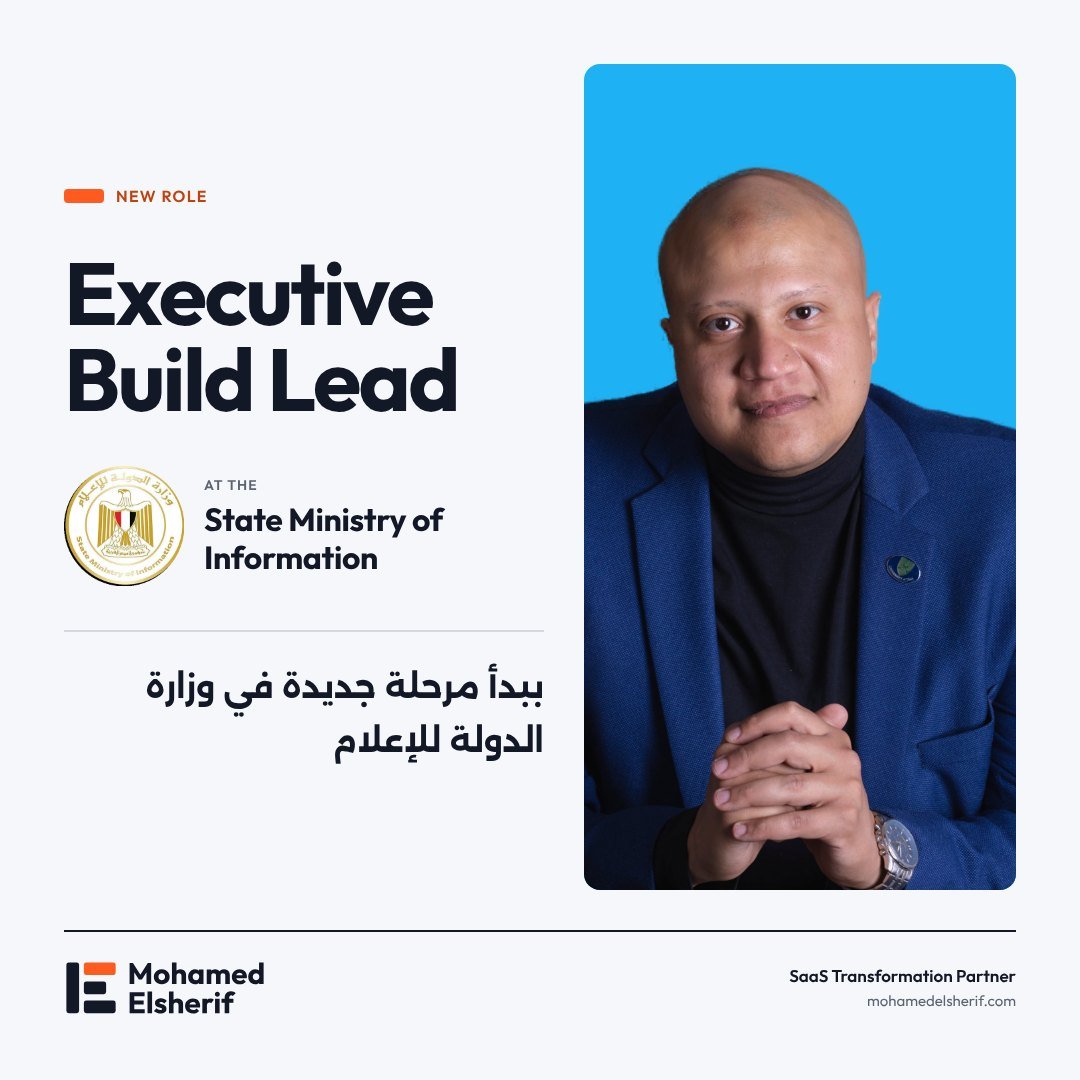
I have spent most of my career on the listening side of that conversation. At Crowd Analyzer I worked on Arabic social listening at a time when Arabic, and Egyptian Arabic in particular, was an afterthought for most global tools. I have now joined the State Ministry of Information as Executive Build Lead, and one question sits at the center of my work: what does it take for an institution to listen as well as the best brands do, and then act on what it hears?
The size of the conversation
The numbers are worth sitting with. According to DataReportal’s Digital 2026 report for Egypt, there were 98.2 million internet users in the country in October 2025, about 82.7% of the population, and 51.6 million active social media user identities. There were also 121 million mobile connections, more than one per person. (DataReportal, Digital 2026: Egypt)
User identities are not the same as unique people, so treat the social media figure as a scale, not a headcount. Even so, that is the largest open focus group in the region, running all day, every day. It speaks in Egyptian Arabic, Franco Arabic, English, memes, voice notes and short videos. Most of it is never written for an official audience, which is exactly why it is honest.
Social listening and media intelligence are not the same thing
People use the two terms interchangeably. They are related, but they answer different questions.
Social listening tracks what people say on social platforms: which topics are rising, how people feel about them, and who is amplifying them.
Media intelligence is wider. It brings in news sites, television, print and local outlets, then adds context: is this a real grievance or a rumor, a passing joke or a growing trend, an organic conversation or a coordinated push?
Listening tells you what is being said. Intelligence tells you so what, and now what.
How listening helps serve people better
When it is done well, this work is not about image. It is about service. Five places where it pays off:
- Seeing problems early. A shortage, an outage or a confusing new procedure shows up in public conversation hours or days before it reaches an official report. Early warning gives the responsible body time to fix the problem instead of explaining it.
- Answering misinformation with facts, fast. A rumor left alone for two days can become what millions believe. Spotting it early, and getting a clear, accurate answer from the right source, protects people from acting on bad information.
- Checking whether a message was understood. Reach is not understanding. Listening shows whether people actually got the point of an announcement, or whether they are confused, anxious or reading it the wrong way.
- Hearing the whole country, not only Cairo. Regional pages and local groups carry concerns that rarely make national headlines. A good monitoring operation gives them the same weight.
- Grounding decisions in evidence. Instead of reacting to the loudest voice in the room, decision makers get a measured view of what people are actually saying and how widely.
A simple framework: Listen, Understand, Respond, Close the loop
This is the model I use, whether for a SaaS company or a public institution.
- Listen. Define the topics that matter, map the sources, and monitor them on a schedule people can rely on. Tools do the heavy lifting, but no single platform sees everything. Video, local news sites and regional pages often need human eyes.
- Understand. Turn mentions into meaning. What is the issue, how big is it, who is affected, is it growing? This is where analysts who know Egyptian dialect, humor and context earn their place. Sarcasm reads as praise to a model trained on formal Arabic.
- Respond. Route each finding to the person who can act on it, with a clear recommendation and a deadline. An insight that sits in a report nobody reads is not intelligence, it is archiving.
- Close the loop. Check whether the response changed anything. Did the confusion clear? Did the complaint volume drop? This step is the one most teams skip, and it is the only one that proves the work matters.
What it takes to build this well in Egypt
A few lessons I keep coming back to:
- Arabic first, Egyptian first. Tools built for English, or for formal Arabic, miss a lot of what Egyptians actually write. Plan for human review from day one.
- People before platforms. The tool is the easy purchase. The hard part is a team that can read the conversation, write clearly under time pressure and keep quality high. I would rather train strong junior digital editors in house than hire a room full of senior titles.
- Speed and accuracy together. Being first with a wrong reading does more damage than being second with a right one. Every fast output needs a quality check built into the workflow, not added at the end.
- Measure yourself, not only others. An institution’s own website and social channels are part of the conversation too. Measuring them every month, with clear recommendations, is how listening turns into better communication.
The guardrails that make it trustworthy
Listening at this scale only works if people can trust it. These are the lines I hold myself to:
- Work with public conversation, and look at patterns across many voices rather than at individuals.
- Keep the purpose clear: better service, accurate information and better decisions.
- Put human judgment between every insight and every action.
- Be open about what is measured and why.
Trust is the asset here. Lose it, and the conversation goes somewhere you cannot hear it.
Why who you build it with matters
None of this gets built by a tool or by one person. It needs a sponsor who understands both media and operations. I am building this work with Khaled ElBarmawi, who sponsors it and to whom I report, and working with him has shaped how I approach it in three ways.
He asks for operational depth, not titles. When we started putting together a group of advisors, he wanted people who have actually run monitoring and social listening operations, not names that look good on a slide. That is the right instinct. This field is learned on the desk.
He insists on measuring our own work. Listening to everyone else is only half the job. He pushed early for regular measurement of the ministry’s own website and social channels, with recommendations attached, so that what we learn feeds straight back into how we communicate.
He works in tight feedback loops. Plans go through version after version, and each round gets sharper because his questions are specific. He is also already asking how AI assistants describe Egypt, a question most organizations have not started on. As more people get their answers from AI rather than from search, that question will only grow.
If you work in media, communication or data in Egypt, his work is worth following.
The conversation is already happening, in every governorate, every day. The question is whether we listen in a way that makes people’s lives a little easier. I believe we can, and I am glad to be building it.
If you have built a listening or monitoring operation, in government or in business, what is the one lesson you wish you had learned earlier?
Take it furtherSee what the AI bill does to your gross margin
Stay on top of MENA SaaS
Every week: what moved in the region’s SaaS industry, what it actually means, and the practical tips I would give a founder sitting in the room. Published on LinkedIn. Subscribe and it comes to your inbox too, with no algorithm in between.